
Khoomii: Mongolian Throat Singing

The Steppe Storyteller
Writer
One of the most memorable sounds you can hear in Mongolia is Khoomii, also written as Khoomei. It is often called Mongolian throat singing, but it is much more than just an unusual singing technique. For Mongolians, Khoomii is connected to nature, nomadic life, and the feeling of the open steppe.
At first, Khoomii can be surprising to hear. A singer seems to produce two sounds at the same time: a deep, steady tone underneath and a higher, almost whistle-like melody above it. It sounds as if a voice and an instrument are coming from one person.
What Makes Khoomii Special?
Khoomii is created by carefully controlling the throat, mouth, tongue, lips, and breathing. The singer begins with a low base sound, then shapes the air inside the mouth to bring out high overtones.
To someone hearing it for the first time, it makes them think it is impossible for a person to produce such sound. The sound is deep, mysterious, and very different from ordinary singing.
But Khoomii is not only about skill. It is also about feeling. Many traditional singers say Khoomii reflects the sounds of nature. The deep tones can remind you of wind moving across the steppe, while the higher notes can sound like birds, rivers, or the echo of mountains.
Where Did Khoomii Come From?
Khoomii is especially associated with western Mongolia and the Altai Mountains. For generations, it was passed down from older singers to younger ones through practice, listening, and memory.
It was traditionally performed during gatherings, celebrations, and quiet moments in nomadic life. Like many parts of Mongolian culture, it was not written down in books at first. It survived because people continued to teach it, perform it, and value it.
Different styles of Khoomii
The different techniques of Khoomii are generally divided into two main styles: Kharkhiraa Khoomii and Isgeree Khoomii. The Kharkhiraa has a deep, rumbling sound. Isgeree style creates a clear, high tone that almost sounds like a flute or a whistle. Each style takes years to learn properly. A good Khoomii singer needs strong breath control, patience, and a very good understanding of how to shape sound inside the body.
Khoomii and Mongolian Culture
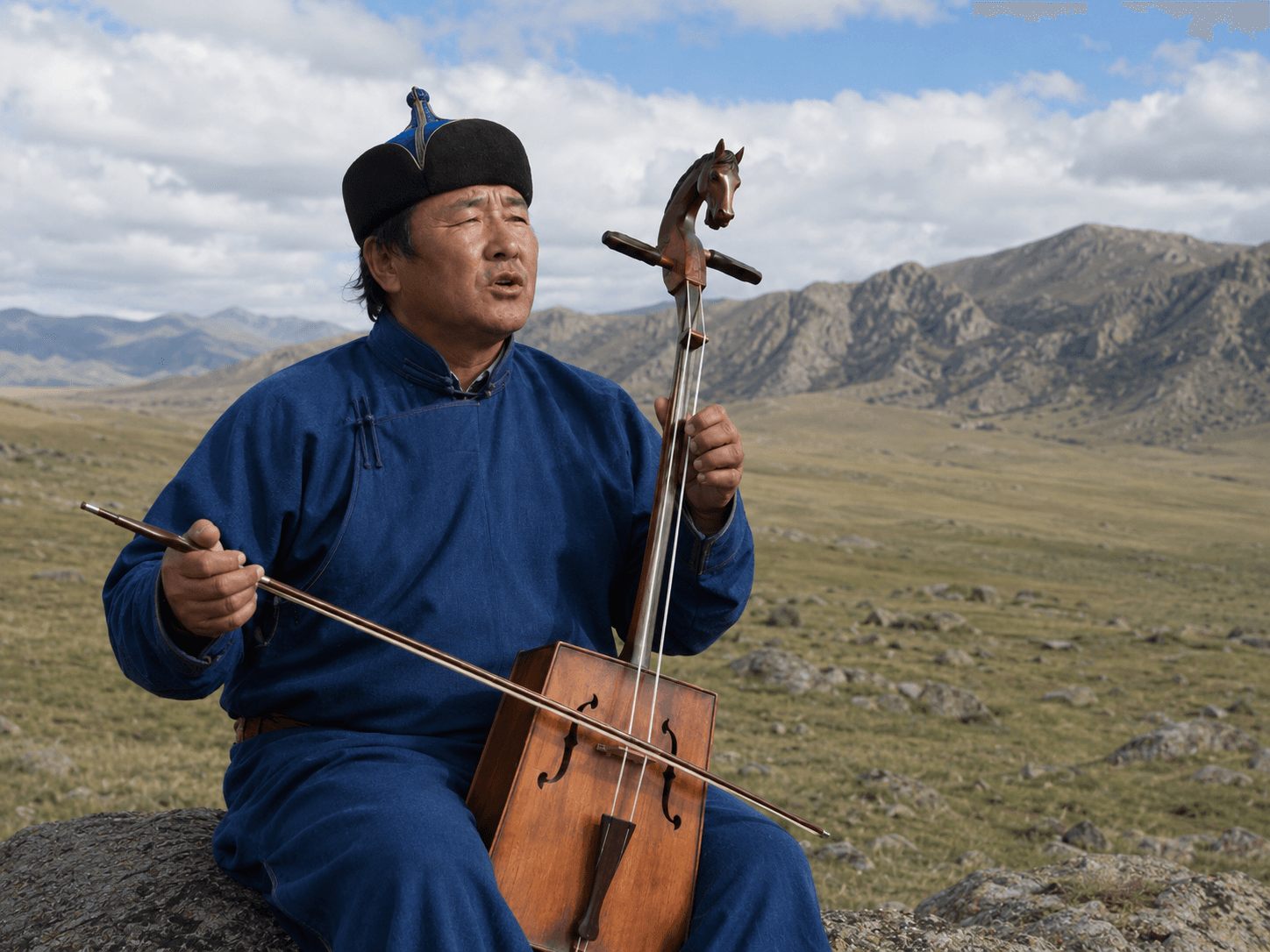
Khoomii is often performed together with traditional instruments, especially the morin khuur, or horsehead fiddle. Together, they create one of the most iconic sounds of Mongolia. The morin khuur has a warm, horse-like tone, while Khoomii adds depth and atmosphere. When performed together, they can make listeners feel the spirit of the steppe, culture, and nomadic life. A short performance can often leave a strong impression. Even if you do not understand the meaning behind every song, the feeling is clear. Khoomii carries something ancient, calm, and powerful.
About the Author
The Steppe Storyteller is a dedicated travel writer who specializes in sharing enduring traditions, stunning landscapes, and nomadic heritage of Mongolia. From the cultural pulse of Ulaanbaatar to the sweeping dunes of the Gobi Desert and the open steppe where herding families maintain centuries-old ways of life, the Storyteller offers insight grounded in cultural understanding and field experience. Each article aims to lead travelers beyond surface impressions, providing thoughtful context, practical knowledge, and a deeper appreciation of Mongolia.
You might also like
View all tipsNo related tips found.